Urban Farming Market: Cultivating the Future of Sustainable Food Systems
The Urban Farming Market continues to grow as cities embrace sustainable food systems and local production. Rising demand for fresh produce, smart farming technologies, and supportive policies are driving steady market growth and reshaping how modern urban communities cultivate and consume food.
In the heart of modern cities, a quiet revolution is taking root — one that blends technology, sustainability, and innovation to reshape how we grow and consume food. The Urban Farming Market has emerged as a dynamic response to the world's rising population, shrinking agricultural land, and growing demand for locally sourced, fresh produce.
As urbanization accelerates, cities around the world are increasingly turning their rooftops, warehouses, and vacant spaces into productive green zones. From hydroponic greenhouses to vertical farming towers and community gardens, urban farming is redefining how food systems operate, ensuring resilience, accessibility, and sustainability for future generations.
Understanding the Urban Farming Market
The Urban Farming Market represents the integration of modern agricultural techniques within urban environments — from small-scale household gardens to large, technologically advanced vertical farms. Unlike traditional farming, which relies heavily on expansive rural land and predictable climate conditions, urban farming leverages innovation to optimize space, conserve water, and minimize transportation emissions.
This model not only enhances food security but also contributes to reducing urban heat islands, improving air quality, and creating local employment opportunities. It embodies the shift toward localized food production, where fresh produce travels fewer miles, retains more nutrients, and aligns with consumers' growing sustainability values.
Urban Farming Market Size and Growth Outlook
According to recent market assessments, the Urban Farming Market size reached around USD 202.9 million in 2022 and is projected to surpass USD 261.1 million by 2032, registering a steady CAGR of 2.7% from 2023 to 2032.
While the growth rate may appear modest compared to high-tech vertical farming segments, the expansion reflects increasing adoption across residential, commercial, and institutional settings. Rapid urbanization, evolving consumer preferences, and government support for sustainable city planning are contributing to this stable upward trajectory.
As urban centers face challenges related to land scarcity, food logistics, and carbon emissions, the Urban Farming Market Growth is expected to accelerate further through digital transformation and automation.
Key Drivers Fueling Urban Farming Market Growth
The expansion of the Urban Farming Market is being propelled by several interconnected trends and economic drivers:
1. Rising Demand for Fresh and Local Produce
Consumers are increasingly aware of the health and environmental impacts of their food choices. Locally grown produce not only offers freshness and better taste but also reduces the carbon footprint associated with long-distance transportation. This shift toward local sourcing directly fuels Urban Farming Market Growth across both developed and emerging economies.
2. Growing Concerns About Food Security
Global supply chains remain vulnerable to climate change, geopolitical tensions, and transportation disruptions. Urban farming provides a decentralized solution, enhancing city-level food resilience and reducing dependence on external food imports.
3. Technological Advancements in Farming Systems
Innovations in hydroponics, aquaponics, and vertical farming have made it possible to cultivate crops in controlled environments with minimal water and nutrient waste. Integration of IoT sensors, data analytics, and AI-driven monitoring systems enables farmers to optimize yield and resource use — key factors driving Urban Farming Market Trends.
4. Government Incentives and Policy Support
Many city administrations are introducing urban agriculture programs, tax incentives, and green infrastructure grants to promote sustainable city living. Supportive policies in regions like Asia-Pacific and Europe have been instrumental in expanding the Urban Farming Market Share by encouraging startups and investors to enter the space.
5. Climate Change and Environmental Sustainability
With climate change disrupting traditional farming cycles, urban farming provides a more predictable and resource-efficient alternative. Its capacity to operate year-round under controlled conditions reduces dependency on rainfall, fertile soil, and seasonal variations.
Market Segmentation: Techniques and Applications
The Urban Farming Market Analysis categorizes operations based on growing techniques, structures, and applications:
By Technique:
• Hydroponics: Dominates the market due to efficient water usage and scalability in urban spaces.
• Aeroponics: Enables soil-free cultivation using nutrient mist, ideal for vertical structures.
• Aquaponics: Combines aquaculture with hydroponics, promoting circular resource systems.
• Soil-based Farming: Includes rooftop gardens and community plots still relevant for small-scale setups.
By Structure:
• Building-based Farms: Utilize rooftops, basements, and warehouses for controlled indoor cultivation.
• Container-based Farms: Modular, mobile, and increasingly adopted in urban logistics networks.
By Application:
• Residential: Small gardens and home-based vertical systems for personal consumption.
• Commercial: Restaurants, supermarkets, and agri-tech firms incorporating onsite growing units.
• Community: Public or cooperative projects designed to promote food awareness and self-sufficiency.
This diversification ensures that the Urban Farming Market caters to a wide range of consumer needs and spatial environments.
Regional Insights: Where Urban Farming is Flourishing
Asia-Pacific: Global Market Leader
Asia-Pacific dominates the Urban Farming Market Share, accounting for over 42% of global revenue in 2022. Rapid urbanization, dense population centers, and limited arable land have pushed cities like Tokyo, Singapore, and Shanghai to adopt vertical and rooftop farming at scale. Governments in the region are integrating food production into smart city planning and offering subsidies for sustainable agriculture technologies.
Europe: Fastest-Growing Region
Europe is emerging as the fastest-growing market, driven by stringent sustainability regulations, innovative startups, and a strong culture of local food sourcing. The EU's commitment to climate neutrality by 2050 is encouraging investments in renewable-powered and zero-waste urban farming systems. Cities such as Berlin, Paris, and London are leading examples of this urban-agriculture renaissance.
North America: Innovating at Scale
In North America, the United States and Canada continue to spearhead Urban Farming Market Growth through technological innovation. The rise of agri-tech firms, venture capital funding, and consumer demand for organic produce are fueling rapid expansion. Smart greenhouses and AI-powered irrigation systems are enabling large-scale operations within urban industrial zones.
Latin America and the Middle East
Emerging economies in Latin America are adopting urban farming to address food insecurity and sustainability challenges. Similarly, Middle Eastern nations are leveraging controlled-environment agriculture to combat water scarcity and desertification, signaling strong future potential for the regional Urban Farming Market.
Competitive Landscape: Key Players and Strategic Developments
The Urban Farming Market Report identifies several major players driving innovation and scalability across global cities. Leading companies include AeroFarms, BrightFarms, Gotham Greens, Plenty, Bowery Farming, Infarm, Freight Farms, and Square Roots.
These organizations are pioneering high-tech, resource-efficient models that combine automation, artificial lighting, and AI-based environmental controls to maximize productivity in limited spaces.
Recent industry developments include:
• AeroFarms expanding into new regions with energy-efficient vertical farming systems.
• Plenty partnering with retail chains to supply locally grown greens year-round.
• Gotham Greens opening new rooftop greenhouses across urban centers in the U.S.
• Infarm scaling its modular urban farms across Europe and the Middle East.
The competition landscape also includes local startups and social enterprises focusing on community-driven farming projects, educational programs, and sustainable food networks.
Emerging Urban Farming Market Trends
As technology and sustainability converge, several new Urban Farming Market Trends are shaping the industry's evolution:
1. Integration with Smart City Infrastructure
Urban farming is increasingly linked to smart city ecosystems, with data-driven systems managing energy, water, and waste cycles. Cities are embedding food production into urban design, creating self-sufficient and resilient communities.
2. Rise of Vertical Farming and LED Innovation
The proliferation of LED lighting technology has revolutionized indoor farming efficiency. Improved spectrum control allows for customized plant growth, reducing energy consumption and enhancing output consistency.
3. Community-Centric Food Systems
From rooftop gardens to urban cooperatives, community-based agriculture initiatives are redefining social and economic interactions in cities. These programs strengthen local economies and foster environmental awareness.
4. Hybrid Models and Circular Economy
The shift toward circular resource systems—where waste from one process becomes input for another—is becoming a cornerstone of urban agriculture. Aquaponics and compost-based systems exemplify this trend, ensuring minimal resource wastage.
Challenges and Opportunities Ahead
Despite its potential, the Urban Farming Market faces several challenges that must be addressed for sustainable scaling:
• High initial setup costs for advanced systems like vertical and hydroponic farms.
• Limited space availability in dense urban centers.
• Energy consumption concerns, particularly in artificial lighting and climate control.
• Regulatory constraints around zoning, building codes, and food distribution licensing.
However, these challenges are counterbalanced by vast opportunities. Integration of renewable energy sources, such as rooftop solar panels, can lower operational costs. Collaboration between private investors, local governments, and communities can unlock new funding models. As awareness grows, urban agriculture could become a central pillar of urban resilience and food security planning.
Urban Farming Market Forecast and Future Outlook
Looking ahead, the Urban Farming Market Forecast points to steady global expansion, underpinned by a convergence of sustainability mandates, agri-tech innovation, and consumer demand for transparency in food sourcing.
By 2032, urban farms are expected to play a critical role in complementing traditional agriculture, particularly in feeding growing metropolitan populations. Cities will increasingly adopt policies promoting urban food production zones, green rooftops, and integrated vertical farming networks.
Technologies like AI, robotics, and machine vision will further transform production efficiency, reducing human labor dependency and ensuring precision agriculture in constrained environments. The next decade will likely see the rise of hybrid food ecosystems, where urban and rural production operate synergistically within a digital supply chain.
A Greener Vision for Urban Living
The Urban Farming Market is more than a trend—it's a vital shift in how humanity addresses the challenges of food security, sustainability, and climate resilience. By merging innovation with environmental responsibility, urban farming transforms cities into living ecosystems capable of nourishing their populations sustainably.
As investors, policymakers, and innovators converge on this opportunity, the future of food will increasingly be cultivated not in distant farmlands but right where it's consumed — in the very heart of our cities. The continued Urban Farming Market Growth signifies a global movement toward smarter, greener, and more equitable food systems—one harvest at a time.
For readers seeking a deeper dive into specific market metrics, regional forecasts, competitive landscapes, and strategic insights, request comprehensive Sample Pages Of Urban Farming Market Report here.
Featured Product
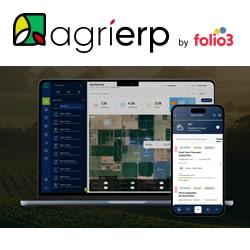
agrierp - Your One-Stop Farm Management Software
AgriERP is an all-in-one, comprehensive farm management suite, built by the farmers for the farmers to maximize profits. Built on the powerful ERP of Microsoft Dynamics 365, AgriERP enables farming enterprises to manage every aspect of their farm from financial management, inventory management, supply chain & logistics management, crop management, operations management, resource management, to sales, contracting, & shipping - All in a centralized platform.