
Yes, challenges like high costs and technical barriers exist, but solutions are emerging, making AI more inclusive and effective. As trends like digital twins, generative AI, and advanced robotics take hold, the potential for smarter, sustainable farming grows.
 How AI Is Revolutionizing Agriculture for a Sustainable Future
Report from | DataM Intelligence
A New Era of Farming with Artificial Intelligence
Imagine a farmer receiving a smartphone alert about a pest outbreak, with precise steps to prevent it before it spreads. This isn’t a scene from a futuristic movie it’s the reality of artificial intelligence (AI) transforming agriculture today. With the global population projected to reach nearly 10 billion by 2050, the pressure to produce more food efficiently is immense. Climate change, resource scarcity, and rising costs add to the challenge. AI steps in as a powerful ally, enabling farmers to grow more with less, using tools like drones, sensors, and predictive analytics. In this blog, we’ll dive into how AI is reshaping farming, its benefits, challenges, and what the future holds for this critical industry.
How AI Is Transforming Farming Practices
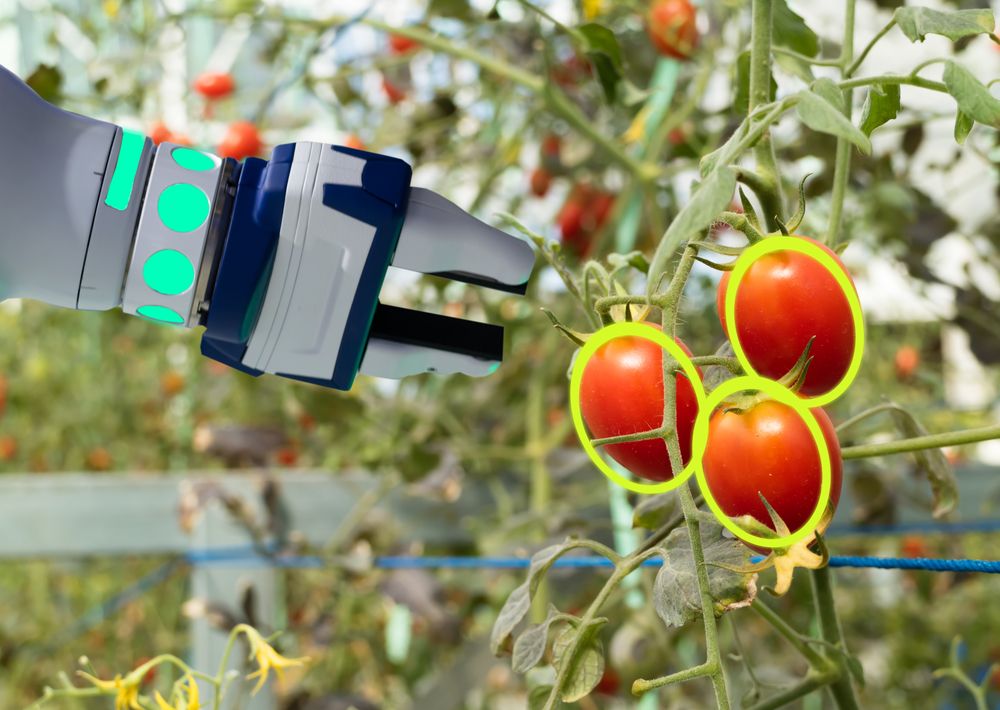
AI brings human-like intelligence to agriculture by analyzing vast amounts of data from sensors, drones, and satellites. Unlike traditional farming, which often relies on intuition or manual checks, AI uses machine learning to identify patterns and deep learning to process complex data like images. This technology is revolutionizing several key areas of agriculture, making operations smarter and more efficient. One standout application is precision farming. AI-powered Internet of Things (IoT) sensors collect real-time data on soil moisture, weather conditions, and crop health. Algorithms then process this data to recommend optimal planting times, select the best seed varieties, and adjust resources like water and fertilizers. For example, predictive analytics can forecast crop yields by analyzing historical trends and current conditions, helping farmers plan harvests and reduce waste. Drones equipped with AI are transforming how farmers monitor their fields. These devices capture high-resolution images to detect issues like nutrient deficiencies, pest infestations, or water stress early. They cover large areas quickly, providing insights that manual inspections can’t match. Similarly, automated irrigation systems use AI to deliver water precisely based on crop needs and weather forecasts, conserving resources and boosting efficiency. In pest management, AI analyzes images to identify threats and recommend targeted treatments, reducing the need for blanket chemical applications. This not only saves costs but also minimizes environmental impact. Robots powered by AI handle labor-intensive tasks like weeding, planting, and harvesting with precision, using sensors to avoid damaging crops. For livestock, AI-enabled wearables monitor animal behavior and health, predicting issues like illness before they become serious. These tools often integrate into comprehensive platforms, offering farmers user-friendly dashboards for managing everything from inventory to cost analysis. By connecting data points, AI creates a holistic view of farm operations, enabling smarter decision-making.
The Transformative Benefits of AI in Agriculture
AI’s impact goes beyond high-tech gadgets it delivers measurable benefits that enhance productivity and sustainability. Here are some of the key advantages:
Resource Optimization: AI ensures water, fertilizers, and pesticides are applied only where needed, reducing waste and cutting costs. This precision leads to healthier crops and less environmental harm, such as preventing overfertilization that pollutes waterways.
Enhanced Crop Monitoring: AI detects diseases and pests early through image analysis, allowing quick interventions that can save entire harvests. This early detection is critical for maintaining high yields.
Accurate Yield Predictions: By analyzing data on weather, soil, and crop health, AI provides reliable forecasts, helping farmers align production with market demands and avoid surpluses or shortages.
Labor Cost Savings: Automation of repetitive tasks like weeding or harvesting reduces reliance on manual labor, especially during peak seasons, boosting productivity and lowering expenses.
Sustainability: AI promotes eco-friendly practices by minimizing chemical use and optimizing resources, aligning with global goals for sustainable food production.
Real-world examples highlight these benefits. In cotton fields, drones use AI for early-season yield estimates, enabling better planning. In vineyards, AI analyzes soil microbes to detect fraud, ensuring product authenticity. For labor-intensive crops like strawberries, robotic assistants work alongside humans, increasing efficiency without replacing jobs entirely.
These advantages translate to higher profits, healthier ecosystems, and more stable food supply chains. By optimizing logistics and pricing, AI also helps farmers navigate market fluctuations, ensuring economic resilience.
Overcoming Challenges in AI Adoption
Despite its promise, integrating AI into agriculture comes with hurdles that must be addressed for widespread adoption. The most significant barrier is cost. High-tech equipment like drones, sensors, and software requires substantial upfront investment, which can be prohibitive for small-scale farmers. This financial challenge limits access, particularly in developing regions. Integrating AI with existing farm systems is another obstacle. Many farms use traditional equipment that isn’t compatible with modern AI tools, and retrofitting or replacing systems is complex and costly. Fragmented data formats further complicate analysis, as sensors and platforms may not communicate seamlessly. A skilled workforce is critical for AI success, but many farmers lack the technical expertise to operate or maintain these systems. Training programs or hiring specialists add to costs and time. Data privacy and security also raise concerns farm data is valuable, and breaches or misuse could erode trust. Questions about who owns the data and how it’s used remain unresolved. Job displacement is a sensitive issue. While automation boosts efficiency, it sparks fears of replacing human workers, particularly in labor-dependent regions. Resistance to change is common, especially when AI’s decision-making process feels like a “black box.” Farmers want transparent, explainable AI to trust its recommendations. Technical limitations persist as well. Algorithms may struggle in unpredictable environments, like varying soil types or extreme weather. They require large, high-quality datasets to avoid errors, which can be hard to obtain in less digitized regions. Poor rural connectivity also hinders real-time data access, and adapting AI to local crops or climates requires ongoing customization. Solutions are emerging, however. Standardized data platforms are simplifying integration, while government initiatives and private partnerships are expanding broadband access. Training programs and user-friendly interfaces are helping bridge the skills gap, and collaborative efforts are making AI more affordable for smaller farms.
The Future of AI in Agriculture: Emerging Trends
The future of AI in agriculture is bright, with exciting trends poised to take farming to new heights. Digital twins virtual models of farms are gaining traction, allowing farmers to simulate scenarios like drought or pest outbreaks to plan better. Generative AI is also emerging, creating tailored content like customized farming advice based on real-time data.
Machine learning and deep learning will continue to improve predictions, from weather forecasting to disease detection. Robotics will evolve, with cooperative machines working alongside humans to enhance safety and efficiency. IoT and cloud computing will enable scalable, real-time analysis, even in remote areas, making AI more accessible. The concept of Agriculture 4.0 emphasizes precision farming with big data, while Agriculture 5.0 will focus on robotics and sustainability. Multimodal AI, which processes images, text, and sensor data together, will provide richer insights. Tailored AI models for specific crops and regions will become standard, using transfer learning to adapt quickly to new conditions. Global collaboration will drive progress, with standards for safety, ethics, and interoperability ensuring AI’s benefits reach all farmers. As costs decrease and trust in AI grows, small-scale farms will gain access, boosting resilience against climate challenges and ensuring food security.
Conclusion: AI as the Backbone of Tomorrow’s Farms
AI is no longer a futuristic concept it’s a practical tool transforming agriculture today. From precision farming to automated harvesting, it’s helping farmers produce more food efficiently while protecting the environment. Yes, challenges like high costs and technical barriers exist, but solutions are emerging, making AI more inclusive and effective. As trends like digital twins, generative AI, and advanced robotics take hold, the potential for smarter, sustainable farming grows. For farmers, consumers, and the planet, AI is paving the way for a resilient food system. By embracing these technologies, agriculture is not just keeping up with global demands it’s setting the stage for a bountiful, sustainable future. Let’s watch as AI plants the seeds for a new era of farming.
The content & opinions in this article are the author’s and do not necessarily represent the views of AgriTechTomorrow
Comments (0)
This post does not have any comments. Be the first to leave a comment below.
Featured Product