
Global Agricultural Drones Market to Hit $29.9 Billion by 2032, Driven by Precision Farming Boom
The global agricultural drones market is projected to reach USD 29.9 billion by 2032, growing at a CAGR of 34.9%. Rising adoption of precision farming, AI integration, and sustainable crop management technologies is transforming global agriculture and farm productivity.
Agricultural Drones Market: Transforming Modern Farming with Precision, Efficiency, and Sustainability
The agricultural landscape is undergoing a dramatic shift driven by advanced technologies that empower farmers to produce more with less. Among these, agricultural drones — also known as unmanned aerial vehicles (UAVs) — have emerged as one of the most transformative tools in precision agriculture. From crop monitoring to targeted spraying, drones are helping producers optimize inputs, increase yields, and improve sustainability.
What Are Agricultural Drones?
Agricultural drones are aerial devices equipped with cameras, sensors, and sometimes spraying systems designed specifically to assist with farming operations. Unlike consumer drones used for photography or entertainment, agricultural drones are purpose-built for tasks such as crop health monitoring, field mapping, pesticide and fertilizer application, livestock tracking, and soil and irrigation analysis. Their ability to collect real-time data over large expanses of land makes them invaluable in today's data-driven agricultural practices.
Agricultural Drones Market Size and Growth Projections
The agricultural drones market has been growing rapidly and is poised for further expansion due to increasing adoption of smart farming practices.
According to Acumen Research and Consulting, the Global Agricultural Drones Market was valued at USD 1.5 billion in 2022 and is projected to reach USD 29.9 billion by 2032, expanding at a compound annual growth rate (CAGR) of 34.9% from 2023 to 2032.
Agricultural drones represent a high-growth segment within the agri-tech ecosystem, driven by technological advances and the global push for sustainable farming.
Agricultural Drones Market Drivers
Several compelling factors are fueling the adoption of agricultural drones:
1. Rising Demand for Precision Agriculture
Farmers worldwide are transitioning from traditional farming techniques to precision agriculture — a farming management concept that uses data and technology to optimize crop outcomes. Drones equipped with high-resolution cameras and multispectral sensors help monitor crop health, soil moisture levels, and nutrient deficiencies with unparalleled accuracy. This granular data enables farmers to make informed decisions that boost productivity and reduce waste.
2. Labor Shortages and Cost Pressures
Agriculture faces chronic labor shortages in many regions, particularly in North America and Europe. Drones reduce dependency on manual labor for tasks such as crop scouting and spraying, lowering operational costs and freeing up labor for more complex activities.
3. Sustainability Imperatives
Drones contribute to sustainable farming practices by enabling precise application of fertilizers, pesticides, and water. This targeted approach reduces chemical usage and runoff, conserving resources and minimizing environmental impact — a key concern as global food systems grapple with climate change and regulatory pressures.
4. Government Support and Policy Incentives
Governments are increasingly recognizing the role of digital technologies in agriculture and have begun offering subsidies, tax incentives, and training programs to encourage drone adoption. India's agricultural drones market, for example, is expected to grow significantly in the coming years, partly due to supportive policies that promote precision farming and technological integration.
5. Technological Advancements
Drones are becoming more capable and affordable due to advancements in sensor technology, GPS accuracy, machine learning algorithms, and battery life. These innovations enhance performance, reduce costs, and expand the range of applications drones can tackle on the farm.
Applications of Drones in Agriculture
Agricultural drones serve a diverse range of functions across the farming value chain:
Crop Monitoring and Field Mapping
One of the most common uses of drones is surveying fields from above to assess plant health, identify stress areas, and generate detailed maps. These aerial perspectives allow farmers to detect pest infestations, nutrient deficiencies, and irrigation issues before they become widespread problems.
Precision Spraying
Drones equipped with spraying systems can apply fertilizers and pesticides more precisely than conventional ground equipment. This not only reduces input costs but also minimizes environmental contamination by preventing over-application.
Soil and Irrigation Analysis
Data collected by drones can be combined with geographic information systems (GIS) and soil sensors to create soil health profiles and irrigation models. This helps farmers optimize water use and improve soil management.
Crop Yield Forecasting
Using machine learning and historical aerial imagery, drones can help forecast crop yields with increasing accuracy. These insights assist farmers in planning harvests and negotiating supply contracts.
Livestock Monitoring
Beyond crops, drones can also monitor livestock health and location, especially on large farms where manual tracking is time-consuming. Sensors and thermal cameras mounted on drones provide key data on animal well-being and movement patterns.
Agricultural Drones Market Regional Outlook
While drone adoption in agriculture is a global trend, some regions stand out:
North America
The United States and Canada are early adopters of drone technology in agriculture. North America accounted for a significant share of the global agricultural drones market, thanks to large-scale commercial farms, high levels of technology adoption, and supportive regulatory frameworks.
Asia-Pacific
Countries such as China, Japan, and India are experiencing rapid growth in drone usage due to government incentives, large agricultural sectors, and an increasing focus on precision farming techniques. China's strong drone manufacturing base also contributes to widespread adoption across the region.
Europe and Latin America
European farmers are increasingly using drones for crop monitoring and sustainability initiatives, while Latin American markets are emerging as growth areas due to rising investment in agritech infrastructure and connectivity.
Download Sample Pages of Agricultural Drones Market Report by Acumen Research And Consulting here.
Agricultural Drones Market Segmentation Insights
Agricultural Drones Market report highlights key segments that define how the agricultural drones industry is structured:
By Type
• Rotary Wing Drones: These multi-rotor designs dominate the market due to their ability to hover and maneuver precisely — ideal for crop spraying and close-range imaging.
• Fixed Wing Drones: Favoured for long-range missions and larger fields due to their extended flight times.
• Hybrid Drones: Combining features of both rotary and fixed wing models, these are gaining traction for versatility and efficiency.
By Component
• Hardware: Includes the drone itself, cameras, sensors, and navigation equipment — typically the largest revenue segment.
• Software and Analytics: Software solutions are increasingly critical for data interpretation, actionable insights, and farm management platforms.
• Drone-as-a-Service (DaaS): A growing model where farmers pay for drone services without owning the hardware.
By Application
• Field Mapping & Monitoring: High demand due to real-time data needs.
• Crop Spraying and Scouting: Key for precision input application and early detection of crop issues.
• Livestock Monitoring and Others: Emerging applications expanding the use cases of drones.
Challenges Facing the Agricultural Drones Market
Despite strong growth, the agricultural drones market faces hurdles:
Regulatory and Airspace Restrictions
Drone operations are subject to aviation regulations that vary by country. Compliance with flight rules and restrictions on beyond-visual-line-of-sight (BVLOS) flights can limit adoption, especially for large-scale operations.
Limited Flight Time and Payload Capacity
Battery limitations constrain the duration and load capacity of smaller drones. While improvements are underway, current technology still limits the efficiency of certain tasks.
Data Privacy and Security Concerns
As drones collect sensitive imagery and geospatial data, concerns about data ownership, privacy, and security are growing among farmers and regulators.
Cost Barriers for Small Farms
Although prices are decreasing, the initial investment in drone hardware and analytics platforms can be prohibitive for smallholder farmers without access to financing or service models.
Agricultural Drones Market Outlook
The future of agricultural drones is promising, driven by technological innovation and broader digital transformation in agriculture. Here are trends to watch:
Artificial Intelligence and Machine Learning Integration
AI-enabled drones that can autonomously identify crop stress, pests, and weeds will enhance decision-making and reduce the need for manual analysis.
Swarm Drone Operations
In the future, multiple drones could coordinate to cover large fields more efficiently, sharing data and optimizing flight paths in real time.
Enhanced Battery and Energy Solutions
Advancements in battery technology and energy management will extend flight time and expand payload capacity, increasing the scope of agricultural applications.
Global Partnerships and Agri-Tech Ecosystems
Collaborations between drone manufacturers, software providers, and agricultural institutions will further catalyze innovation and lower barriers to adoption.
Agricultural drones are redefining modern farming by offering unprecedented insights, precision, and operational efficiency. Supported by robust market growth projections from multiple research firms, the industry is positioned for significant expansion over the next decade. As technology continues to evolve and regulatory frameworks adapt, drones will play an increasingly integral role in addressing global challenges — from food security and labor shortages to sustainability and climate resilience.
For farmers, agribusinesses, and investors looking to the future, agricultural drones represent not just a tool but a disruptive force shaping the next era of intelligent, sustainable agriculture.
Featured Product
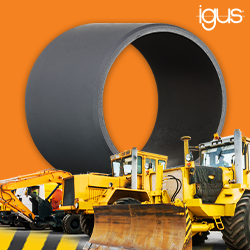
iglide® Q3E - two-component, high-load bearings for heavy-duty use
In this iglide® multi-component bearing, the outstanding tribological properties of iglide® Q3 are embedded in a high-strength jacket. The result is an even higher mechanical load capacity with simultaneously low wear, perfect for heavy-duty applications in harsh environments.