Global AgTech Market Growth, Size & Share Trends Driving Future Tech
The AgTech Market is rapidly expanding as farms adopt precision agriculture, automation, and sustainable technologies. Driven by food security needs, innovation, and supportive policies, the AgTech Market Size and AgTech Market Share are projected to grow significantly by 2035.
AgTech Market: Size, Share, Trends and Future Outlook
Market Size & Growth Trends
The AgTech Market Size has shown strong expansion in recent years, with an estimated valuation of approximately USD 23.63 billion in 2024. The sector is forecasted to grow to around USD 82.22 billion by 2035, reflecting a compound annual growth rate (CAGR) of about 12% between 2025 and 2035.
Several forces fuel this growth:
• Rising global population intensifying the need for efficient food production systems.
• Technological advances in data analytics, IoT, robotics, and AI shaping modern agriculture.
• Increased focus on sustainable and environmentally responsible farming practices.
• Government policies and public investments promoting AgTech adoption in farming communities.
Together, these dynamics contribute to the expansion of the AgTech Market Share across regions and technology segments.
Key Technology Segments Driving Market Share
The AgTech landscape is composed of multiple technologies, each influencing market share in unique ways:
• Precision Agriculture: Currently dominates the market as the largest segment. It uses GPS, sensors, drones, and data analytics to optimize crop yields and resource use, leading to higher adoption among growers seeking efficiency and cost savings.
• Automation & Robotics: Fast becoming one of the fastest-growing segments due to labor shortages and the drive to streamline fieldwork. Automated machinery and robotic systems enhance productivity and reduce dependence on manual labor.
• Biotechnology and Farm Management Software: These areas are expanding as farmers and agribusinesses invest in digital solutions to improve genetic crop traits and manage operations more effectively.
Each of these technology categories contributes to the overall AgTech Market Share by offering scalable solutions that address specific agricultural challenges.
Application and End Use Dynamics
The AgTech Market is applied across a range of farming practices:
• Crop Management: Tools for soil and crop health monitoring are widely adopted to increase yield potential.
• Livestock and Greenhouse Management: Digital monitoring solutions improve animal health and controlled-environment crop systems.
• Farm Management Software: Centralizes data for decision-making, boosting operational efficiency across farm types.
Among end users, traditional farms hold the largest share of the AgTech Market, driven by the sheer scale of agricultural operations and the immediate ROI from precision and automation technologies. Agricultural cooperatives are also emerging as important adopters, leveraging shared technology investments to compete more effectively. Research institutions, while smaller in share, play a vital role in technology innovation and validation.
Regional Market Share Insights
Geographical distribution of AgTech Market Share reveals varying degrees of adoption and investment:
• North America: Holds the largest share globally, accounting for nearly half of the market value. Strong infrastructure, access to capital, and advanced technology use contribute to its leadership.
• Europe: The second-largest market, driven by stringent sustainability policies and demand for organic and eco-friendly food production.
• Asia-Pacific: Presents rapid growth potential, supported by population pressures, modernization of farming practices, and government initiatives aimed at improving food security.
• Middle East & Africa: Smaller share but emerging due to investments targeting water-efficient and climate-resilient agricultural solutions.
These regional differences influence the AgTech Market Size and AgTech Market Share, creating diverse opportunities for investors and technology providers.
Market Drivers and Challenges
Several macroeconomic and industry-specific forces shape the future of the AgTech market:
• Food Security & Population Growth: With the global population projected to reach nearly 10 billion by 2050, the demand for efficient and sustainable food production technologies intensifies.
• Technological Innovation: Adoption of AI, IoT, and machine learning enables predictive insights, optimized yield, and resource efficiency.
• Government & Policy Support: Subsidies, research funding, and favorable regulations encourage technology uptake, especially in developed and emerging markets.
However, barriers such as high initial costs, limited technology accessibility in developing regions, and capital constraints in some markets can slow adoption. Despite this, ongoing innovation and falling technology costs are expected to mitigate these challenges over time.
Future Outlook
Looking ahead, the AgTech Market is set for sustained growth as digital and automated solutions gain further traction. Emerging areas such as vertical farming, AI-driven analytics, and blockchain-enabled traceability will likely shape future market share dynamics. As stakeholders across agriculture embrace these technologies, the AgTech industry's role in enhancing global food systems will become increasingly strategic.
In conclusion, the AgTech Market Size and AgTech Market Share continue to grow in response to technological advancements, sustainability drives, and the imperative to feed a growing global population. These factors position AgTech as a cornerstone of modern agriculture, with broad implications for efficiency, environmental stewardship, and food security in the decades ahead.
Featured Product
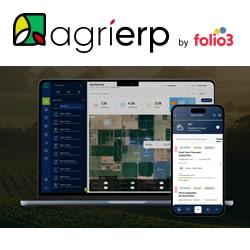
agrierp - Your One-Stop Farm Management Software
AgriERP is an all-in-one, comprehensive farm management suite, built by the farmers for the farmers to maximize profits. Built on the powerful ERP of Microsoft Dynamics 365, AgriERP enables farming enterprises to manage every aspect of their farm from financial management, inventory management, supply chain & logistics management, crop management, operations management, resource management, to sales, contracting, & shipping - All in a centralized platform.