
Farm Tyre Market Growth Driven by Agricultural Mechanization and Smart Farming Innovations
The Global Farm Tyre Market is projected to reach USD 12.6 billion by 2032, growing at a 5.1% CAGR. Explore how mechanization, precision agriculture, and smart tyre technologies are reshaping global farm mobility. Insights from Acumen Research and Consulting.
Farm Tyre Market: The Unsung Force Behind Agricultural Modernization
While the world's attention often focuses on autonomous tractors, AI-driven sensors, and high-tech harvesters, one of the most essential components of modern agriculture remains grounded—literally. Farm tyres, the interface between machine and soil, play a defining role in driving productivity, efficiency, and sustainability across global farmlands.
According to Acumen Research and Consulting, the Global Farm Tyre Market size was valued at USD 8.1 billion in 2023 and is projected to reach USD 12.6 billion by 2032, growing at a steady CAGR of 5.1% from 2024 to 2032.
This growth is closely tied to the rapid mechanization of agriculture, technological innovation in tyre design, and the emergence of sustainability as a performance metric in farming equipment.
Mechanization: The Engine of Farm Tyre Market Growth
The mechanization of agriculture continues to expand rapidly across both developed and emerging markets. Tractors, harvesters, sprayers, and other high-torque farm vehicles increasingly rely on specialized tyres capable of handling diverse terrains, high loads, and fluctuating weather conditions.
Acumen Research and Consulting notes that tractor tyres dominate the global market, accounting for the largest share in 2023. The expanding adoption of compact and mid-sized tractors in India, China, and Southeast Asia is a significant demand driver. Meanwhile, North America and Europe are witnessing upgrades to larger, high-traction radial tyres for modern precision agriculture systems.
Bias vs. Radial: The Evolution of Farm Tyre Technology
Two key product categories—bias tyres and radial tyres—define the industry's evolution.
• Bias tyres, known for their durability and low upfront cost, still command a significant share of the market. Their robust construction makes them suitable for smaller tractors and heavy-duty equipment used on uneven terrains.
• Radial tyres, however, are driving the future of the Farm Tyre Market. Their superior traction, reduced soil compaction, and enhanced fuel efficiency align perfectly with the global shift toward sustainable farming.
In recent years, manufacturers have introduced IF (Increased Flexion) and VF (Very High Flexion) tyre technologies. These designs allow lower inflation pressures, distributing weight more evenly across the soil, which is critical for minimizing compaction and improving crop yields.
Such advancements are not just improving operational performance—they're redefining the relationship between machine and soil in modern agriculture.
Smart Tyres and Digital Monitoring: Precision Agriculture Gets a Grip
Agriculture's digital transformation has reached the tyre industry as well. Smart tyre systems now integrate IoT sensors that monitor air pressure, temperature, and load in real-time. These connected systems allow farmers and fleet managers to optimize tyre performance, extend lifespan, and prevent costly downtimes.
Companies are investing heavily in digital tyre ecosystems. For example, tyre pressure monitoring systems (TPMS) are being integrated with tractor telematics platforms, enabling automatic adjustments based on terrain and load. Such features not only enhance field efficiency but also reduce fuel consumption—directly impacting sustainability and operating costs.
As precision agriculture becomes mainstream, data-driven tyre management will play an increasingly vital role in achieving consistent productivity gains.
Farm Tyre Market Regional Landscape
Asia-Pacific: The Growth Epicenter
The Asia-Pacific region currently holds the largest Farm Tyre Market Share, accounting for around 42% of global revenue. This dominance stems from extensive agricultural activity, rising mechanization rates, and large-scale food production requirements.
India and China are leading the charge, supported by government incentives for modern agricultural machinery and strong local manufacturing bases for tyres.
North America: Upgrading for Efficiency
In North America, technological sophistication and farm consolidation are driving demand for advanced radial and VF tyres. Farmers in the U.S. and Canada are increasingly investing in tyres that reduce soil compaction and maximize traction efficiency, aligning with regenerative farming practices.
Europe: Sustainability at the Core
European markets emphasize sustainability, with stricter soil preservation and emissions standards guiding machinery design. European farmers are rapidly transitioning to energy-efficient, low-compaction tyre systems to meet environmental targets.
Middle East & Africa: Emerging Mechanization Frontier
While smaller in market share, the Middle East and Africa present substantial growth potential. Mechanization is expanding as nations modernize agricultural operations to meet food security goals, creating new opportunities for farm tyre manufacturers.
Key Market Trends Shaping the Future
1. Sustainable Materials and Eco-Friendly Manufacturing
Tyre manufacturers are exploring bio-based compounds and recyclable materials to reduce environmental impact. These initiatives are aligning farm tyre production with global sustainability mandates and circular economy models.
2. Advanced Tread Designs for Multi-Condition Use
Farmers now demand tyres that can perform both on and off the field. Hybrid tread designs provide better road handling for farm-to-market transport while maintaining field traction—eliminating the need for frequent tyre changes.
3. Aftermarket Expansion and Retreading
As agricultural machinery fleets grow, the aftermarket segment for farm tyres—especially retreading—has seen strong growth. Farmers are increasingly choosing high-quality retreaded tyres to balance cost and performance without compromising safety or durability.
4. OEM and Aftermarket Synergy
Manufacturers are strengthening collaborations with Original Equipment Manufacturers (OEMs) to develop integrated tyre solutions tailored to specific machinery types. This synergy enhances performance efficiency and brand loyalty within the agricultural value chain.
Challenges Facing the Farm Tyre Market
Despite the promising growth trajectory, the Farm Tyre Market faces several challenges that influence pricing and supply stability:
• Raw Material Volatility: Fluctuations in natural rubber and synthetic materials can impact production costs.
• Climate-Driven Stress: Extreme temperatures and soil conditions require constant innovation in compound formulations.
• Adoption Gaps in Developing Regions: While mechanization is rising, cost barriers and limited awareness still slow adoption in some emerging economies.
Manufacturers are mitigating these challenges through localized production, flexible supply chains, and continuous R&D investment in resilient tyre technologies.
Competitive Landscape: Global Brands Leading Innovation
The Farm Tyre Market Report by Acumen Research and Consulting highlights key industry players such as:
Michelin, Bridgestone Corporation, Apollo Tyres Ltd., Balkrishna Industries Ltd. (BKT), Continental AG, CEAT Ltd., MRF Ltd., Sumitomo Rubber Industries, TBC Corporation, Titan International, JK Tyre & Industries, and Hankook Tire.
These companies are investing in product differentiation, smart tyre technology, and sustainability-driven innovation. Michelin's "Ultraflex Technology," for instance, allows tyres to carry heavier loads at lower pressures, while BKT's digital tire monitoring systems support predictive maintenance and precision operations.
Farm Tyre Market Outlook: From Traction to Transformation
The evolution of the Farm Tyre Market is no longer limited to rubber and tread—it's about intelligence, efficiency, and environmental balance. By 2032, as Acumen Research and Consulting projects the market to surpass USD 12.6 billion, tyres will play a far greater role in data-driven, sustainable farming ecosystems.
The integration of smart tyre technology with autonomous tractors, AI-driven field analytics, and real-time telematics will transform tyres from passive components to active contributors in the digital farm ecosystem.
In essence, the modern farm tyre is becoming not just a support system—but a source of data, control, and precision.
Agricultural progress has always depended on traction, and in the coming decade, that traction will be smarter, greener, and more efficient than ever before. The Global Farm Tyre Market exemplifies how a traditional industry is reinventing itself through sustainability, digital integration, and engineering innovation.
Explore full data breakdown, regional segmentation, and company profiles shaping this market in the comprehensive Sample Pages of Farm Tyre Market Report Report by Acumen Research and Consulting.
Featured Product
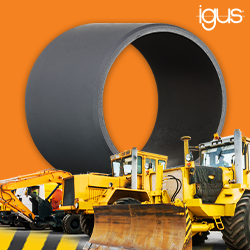
iglide® Q3E - two-component, high-load bearings for heavy-duty use
In this iglide® multi-component bearing, the outstanding tribological properties of iglide® Q3 are embedded in a high-strength jacket. The result is an even higher mechanical load capacity with simultaneously low wear, perfect for heavy-duty applications in harsh environments.