
Customizing plant metabolism through light modulation
Introduction
Light is the most crucial energy source and stimulator for plants. Light quality (referring to the spectral composition), light quantity (quanta/photons of light reaching the plant surface), also known as light intensity and the light duration (photoperiod) are the key components of light, shaping plant morphogenesis and physiological processes. Light is the primary driving force for photosynthesis and act as a stimulus which trigger cellular responses through sensory protein receptors called photoreceptors. Light is critical in regulating the biosynthesis and accumulation of primary metabolites (sugars and polysaccharides) and specialised metabolites (SM) via photoreceptors.
How does light control plant metabolism?
Photosynthesis is the basis for the production of diverse carbohydrates and other organic molecules leading to plant growth, development and survival under various environmental situations. In the process of photosynthesis, plants harvest light of specific wavelength by photosynthetic pigments (Chl a and Chl b) to form chemical energy, thereafter, the atmospheric carbon dioxide is reduced to form carbohydrates. Both light quality and intensity are vital in determining the rate of photosynthesis and photosynthetic efficiency. The photosynthetic rate is directly proportional to light intensity up to an optimal level further which, photoinhibition or damage of chlorophyll pigments occur. A positive correlation was observed between light intensity and activity of sugar metabolizing enzymes relative to the amount of sugar accumulation. The increase in the accumulation of these metabolites is most likely due to the upregulation of relevant genes via activation of photoreceptors (phytochromes, cryptochromes and UVR8) and related transcription factors. Red and blue lights are most efficient in driving photosynthesis, as they correspond to the absorption maxima of chlorophyll a and b, while green light, though less efficiently absorbed, penetrates deeper into leaf tissues and contributes to photosynthesis in lower canopy layers.
Light sensing and signaling mode under different light environments
Plants perceive light of different spectral quality through specific photoreceptors present across the plant each tuned to specific wavelengths, which initiate complex signaling cascades to regulate gene expression and metabolism. The major plant photoreceptors are phytochrome, cryptochrome, phototropins and UV-B resistance 8 (UVR8). In general, the photoreceptors are activated upon perception of different light wavelengths. Red and far-red lights are perceived by phytochromes (PHYA-PHYE), blue and UV-A by cryptochromes (CRY1 and CRY2) and UV-B is detected by UVR8. The activated photoreceptors send downstream signals to transcriptional regulators (transcription factors) which either activate or repress multiple light-induced biological functions. The major light responsive transcriptional regulators are ELONGATED HYPOCOTYL 5 (HY5), PHYTOCHROME INTERACTING FACTORS (PIFs), B-box proteins (BBX), Constitutive Photomorphogenic 1 (COP1), Suppressor of PHYA-105 (SPA) and De-Etiolated 1 (DET1). HY5 is the master regulator of light induced gene expression. It is a bZIP transcription factor that acts downstream of photoreceptors PHY, CRY and UVR8). It binds directly to the G-box motifs in the promoter region of genes responsible for photosynthesis, sugar metabolism, and biosynthesis of secondary metabolites such as chalcone synthase (CHS), phenylalanine ammonia lyase (PAL), DFR and MYB transcription factors. In the presence of light, HY5 promotes photomorphogenesis, flavonoid and anthocyanin accumulation. The stability of HY5 is regulated by COP1-mediated ubiquitination. In the absence of light, COP1/SPA and DET1 are activated which ubiquitinize and degrade HY5, while PIFs are stabilized. On the contrary, the presence of light supresses the activity of COP1/SPA and DET1, ensuing degradation of PIFs and stabilization of HY5.
The regulatory mechanisms of these TFs under various light settings are as follows:
- Ultra violet:
UV radiation activates photoreceptor UVR8 which binds to COP1, leading to activation and stabilization of HY5. HY5 then induce the expression of PAL, C4H and CHS, the key regulatory enzymes of the phenylpropanoid pathway, promoting biosynthesis and accumulation of phenolics, flavonoids and anthocyanin. These SM then protect the plants from oxidative stress.
- Blue light:
Blue light activates cryptochromes and phototropins, mediating photomorphogenesis and stomatal opening. It upregulates HY5 and MYB, inducing the expression of PAL, CHS and 4CL which promotes phenolic and anthocyanin accumulation leading to enhanced antioxidant capacity of the plant. Blue light also modulates terpenoid biosynthesis by regulating the activity of DXS and DXR enzyme of the MEP pathway.
- Red light:
Red light activates phytochromes, which are translocated to the nucleus. Here, phytochromes interact with PIFs resulting in regulation of genes involved in photomorphogenesis, chlorophyll biosynthesis, and metabolic pathways. It can promote or inhibit secondary metabolite accumulation depending on species and developmental stage of the plant. PIFs act synergistically or antagonistically with HY5 to regulate metabolic processes.
- Green light:
Green light alters the effects of blue light. It shows synergistic effect with UV light in production of phenolics and phytohormones. It also influences photomorphogenesis, biosynthesis and accumulation of secondary metabolites through cryptochrome. Green light can modulate the metabolic pathways of secondary metabolites by regulating the expression of PAL and CHS enzyme.
- Multiple wavelengths
Combination of multiple light quality in specific ratio confers significant outcome in the overall performance of the plant. Superior quality of plants with higher yield, antioxidant capacity, nutrients and concentration of specialized metabolites are obtained in comparison to monochromatic lights. However, a deeper understanding on the activation of multiple photoreceptors initiating synergistic or antagonistic regulatory mechanism of downstream signalling cascade by multiple light qualities are yet to be explored.
- Light intensity:
Light intensity is crucial in shaping plant metabolism. It directly influences sugar metabolism by driving the production of substrates and regulating the expressions of sugar transporters, such as SUTs (sucrose transporters), MSTs (monosaccharide transporters), and SWEETs, which mediate the allocation of carbohydrates from source to sink tissues. The activities of key sugar metabolizing enzymes such as sucrose phosphate synthase (SPS), sucrose synthase (SUS), and invertase (INV) are enhanced by high light, boosting export of sucrose thereby promoting accumulation of polysaccharides and anthocyanins in various species. On the other hand, low light and shading decreases sugar accumulation due to reduced enzyme activities of sugar transporters and sugar metabolizing enzymes, impacting plant growth. Phytochrome B (PHYB) also play a major role in regulating starch accumulation and sugar metabolism under the influence of light intensity.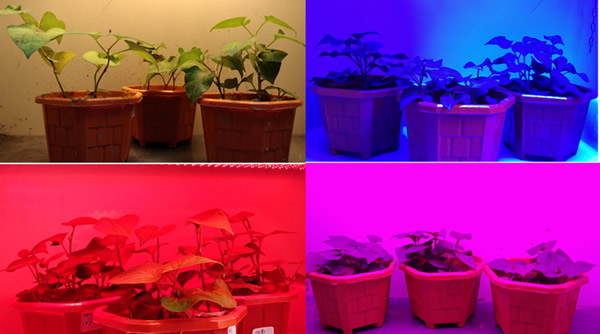
Functions of key light responsive TFs under light and dark conditions
|
Transcription factors |
Light |
Dark |
Type |
|
PIFs |
Repressor |
Active, promote skotomorphogenesis |
bHLH |
|
HY5 |
Activator |
Repress |
bZIP |
|
BBX |
Activator |
Repress |
Zinc finger |
|
COP1 |
Repressor |
Active, degradation of HY5 and stabilize PIFs |
E3 ubiquitin ligase |
|
SPA |
Repressor |
Active, degradation of HY5 and stabilize PIFs |
bZIP |
Methods to manipulate plant metabolism:
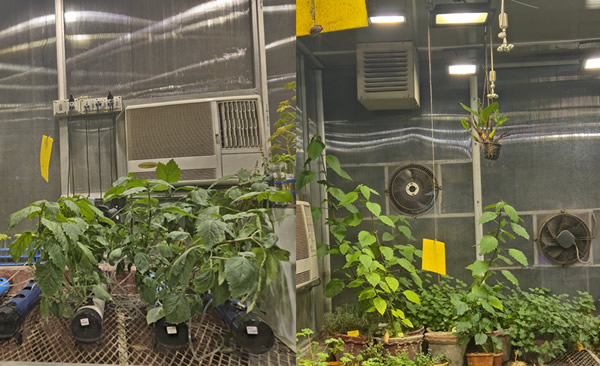
- Use of light emitting diodes: Programmable LED arrays could be developed with precise light control system which could deliver specific light spectra and intensities optimized for enhance accumulation of desired metabolites. Plants response to different light parameters are specific to species, cultivars and developmental stages. Hence, optimization of light recipe is subjected to the plant species, developmental stage, target metabolite and desired trade-off between growth and metabolite accumulation. For example, high blue light could be used to increase anthocyanin and phenolics, while, red and blue combination maximizes both biomass and metabolite content. High light intensity increases carbon assimilation, enhancing both primary and secondary metabolites.
- Use of shade nets: Photo selective, diffusive and spectral shifting shade nets could be deployed to modulate light quality, intensity and distribution which are found to stimulate photosynthesis and improve metabolite content and yield.
- Use of supplementary lighting: Supplemental LED lighting could be used to optimize spectral light and intensity during low natural light periods, enhancing both growth and metabolite accumulation.
Conclusion
Tailoring of light is a powerful tool for customizing plant metabolic networks, allowing precise control over growth, development, and metabolite production. Through the action of specialized photoreceptors and complex signaling pathways, plants integrate light cues to regulate primary and secondary metabolism, balancing growth, defense, and adaptation. Advances in LED technology and controlled environment agriculture have made it possible to design precise light regimes that optimize both biomass production and the accumulation of valuable phytochemicals. This technology offers a sustainable approach towards the development of high performing plants. Continuous research into the molecular mechanisms, species-specific responses, and practical applications of light modulation will further enhance our ability to engineer plant metabolism for food, health, and industrial purposes with resilience to climate change.
Comments (0)
This post does not have any comments. Be the first to leave a comment below.
Featured Product