
Giving agriculture a global do-over could feed nearly a billion more people
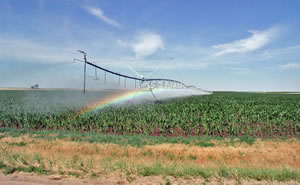 Diana Gitig for Ars Technica: As the human population grows and the human middle class grows in developing countries, we are going to need more. More food, more meat, more energy. And producing more is going to require more resources. Since we are just about tapped out of the resources required for food production—namely water and land—we are going to have to figure out how to use these limited resources as efficiently as possible.
A number of suggestions have been made to try to achieve this, from the lower tech—like curbing animal consumption and minimizing food waste—to the higher tech, like planting GMOS that might improve yields, developing better fertilizers, and maximizing irrigation efficiency. A new analysis in Nature Geoscience offers up one more: switching what we grow where.
The authors write: “We find that the current distribution of crops around the world neither attains maximum production nor minimum water use.” This is hardly surprising, since agriculture developed in a haphazard, piecemeal way, pushed by different political entities with different agendas over centuries. No one ever sat down with the whole globe before to determine what would grow best in each region.
But these scientists claim that shuffling around crops based on how much rain and irrigation water they need could feed 825 million more people than the planet can currently sustain, while cutting water use by about 13 percent. Their primary goal was to optimize food production (in terms of calories grown) while saving water. But they also attempted to render rain-fed crops more resilient to droughts, to leverage local knowledge and technologies, and to maintain crop diversity. Full Article:
Comments (0)
This post does not have any comments. Be the first to leave a comment below.
Featured Product