
Google Attracts Top U.S. Automakers With Self-Driving Technology
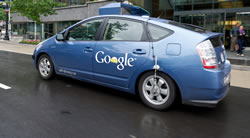 Jack Clark for Bloomberg Business: Google’s self-driving car technology is attracting top U.S. automakers, as Ford, Fiat Chrysler and General Motors talk with the company while laying the groundwork for a future with autonomous cars.
Ford Motor Co. and Google are discussing working together, including in a joint venture to build cars using Google’s technology, said a person familiar with the talks who asked not to be identified because the discussions are private.
That follows comments in October from Mark Reuss, product development chief for General Motors Co., that the automaker was “very interested” in exploring ways its manufacturing skills could complement Google’s system. Sergio Marchionne, chief executive officer of Fiat Chrysler Automobiles NV, has said repeatedly the past few months that his company wants to work on autonomous driving with technology companies such as Apple Inc. and Google.
“We are entering the era of the technology and software-defined vehicle,” said Thilo Koslowski, a vice president in the automotive practice at Gartner Inc. “You’re just seeing the auto industry recognize the importance of that.” Cont'd...
Featured Product