
High Precision Micro-Positioning Actuators Available for Fast Delivery
Designed for optical alignment, precision automation, and research applications
For applications requiring sub-micrometer precision, PI's L-220 series linear actuators provide reliable, high-precision motion in a compact design. Engineered for demanding tasks in optics, photonics, semiconductor testing, metrology, and microscopy, select models are available with short lead times to support fast system integration.
PI's motorized high-resolution actuators combine precision and force in a compact form factor. With travel ranges from 13 to 77mm (½" to 3") and feed forces up to 125N, they support a broad range of applications. Their low backlash and non-rotating, linearly guided tips minimize tilt and eccentricity-caused errors, as common with low-cost, rotating-tip type actuators — ensuring accurate, repeatable motion.
Available with closed-loop DC servo or stepper motors, L-220 actuators achieve speeds up to 3.5mm/s and minimum incremental motion down to 0.1µm. The actuators are self-locking and provide high holding forces for position stability without continuous power.
Vacuum Rated Variants
The L-220 linear actuator is also available for vacuum environments up to 10-6 hPa and for cleanroom applications.
Applications
Used worldwide—from semiconductor fabs to optical labs—L-220 micro-positioning actuators provide precision motion, repeatable 100nm steps and high reliability. With fast availability, they enable design engineers to respond quickly to new project requirements and maintain a competitive edge.
Industries Served
Semiconductors, optics, laser processing, photonics, medical technology
More information: L-220 High-Resolution Linear Actuator
Featured Product
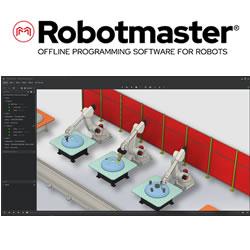
Robotmaster 2024
Program multi-robot cells and automatically solve robotic errors with ease. Hypertherm Associates announces a new version to its robotic programming software. Robotmaster 2024 addresses key market trends including the support for programming multiple robots in a single work cell and the demand for automatic trajectory optimization and robotic error correction.