
NXT Robotics Announces Service Partnership with Ricoh
"This arrangement allows us to service our customers on a round-the-clock basis and continue to grow our business"
Reflecting a growing global demand for industrial robots, NXT Robotics, an emerging security robotics firm, has announced an on-site service partnership with Ricoh USA Inc. This partnership leverages the RICOH Service Advantage program and utilizes Ricoh's vast global network of repair and service specialists.
RICOH Service Advantage offers businesses access to Ricoh's global network of highly skilled and certified services employees. It empowers businesses to work smarter by capitalizing on business growth opportunities, driving new revenues and profits, and delivering consistent customer experiences by providing these qualified resources as an extension of customers' operations teams.
With NXT, Service Advantage will bring the highest levels of expertise for its AI-driven software operating systems that keep the robots operating at full capacity at outsource locales throughout the United States.
"As we add more security robots to our fleet and accelerate the rollout of our Cognitive Robotics Platform to customers," said NXT Robotics CEO/Co-founder Darin Andersen, "our partnership with Ricoh allows us to provide service on a round-the-clock basis throughout the globe, expanding our footprint and business."
Added Andersen: "Now, whenever we have an urgent need for on-site repairs, service and/or replacement parts, we're able to quickly deploy a select team from Ricoh's exceptional corps of more than 17,000 experts, helping ensure our customers deliver the uptime required to meet their clients' needs."
According to Dale Walsh, Director of Innovation for Ricoh Service Advantage, "We're committed to helping companies like NXT address their customers' needs, by providing the highest level of service on their robots and helping ensure that their customers realize maximum uptime for their technology investment."
Walsh also stated: "As a startup with early success, NXT has impressed our team with its leadership and pioneering vision, especially valued traits in this exceptionally fast-growing and uncharted technology."
In August 2018, NXT announced a working partnership to provide on-site security robots and software technology to Ace Parking, a San Diego-based parking services firm with a network of nation-wide clients including major structures, stadiums and casinos.
About NXT Robotics: NXT Robotics is a San Diego, CA-based company that provides computer software for its Unmanned Ground Vehicles (UGVs), commonly known as robots, to support increased security monitoring and alerting requirements. Founded in 2014, the company's unique autonomous platforms deliver security-related services while meeting performance and cost expectations for indoor and outdoor applications.
About Ricoh: Ricoh is empowering digital workplaces using innovative technologies and services enabling individuals to work smarter. For more than 80 years, Ricoh has been driving innovation and is a leading provider of document management solutions, IT services, commercial and industrial printing, digital cameras, and industrial systems. Headquartered in Tokyo, Ricoh Group operates in approximately 200 countries and regions. In the financial year ended March 2018, Ricoh Group had worldwide sales of nearly $20 billion.
Featured Product
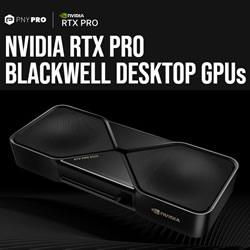
NVIDIA RTX PRO BLACKWELL DESKTOP GPUs
NVIDIA RTX PRO - Built for Professionals - NVIDIA RTX PRO Blackwell Desktop GPUs feature the latest breakthroughs in AI, ray tracing, and neural rendering technology to power the most innovative workflows in design, engineering, and beyond.