
Schunk - EGN: The First Certified Safety Gripper
The EGN gripper is modularly designed and covers a wide range of applications.
The EGN Safety is the first certified safety gripping system from SCHUNK for use with human and robot interaction. It is certified in accordance with DIN EN ISO 13849 specifications.
If the production process is interrupted by an emergency shut-off, the SCHUNK EGN goes into either a safety speed mode or a safe stop mode, depending on the activated protection zone.
Unlike other options on the market, the SCHUNK safety gripping system is continuously powered even if in a safety stop, and will safely hold the gripped part. As soon as the protection zone is released, the gripper switches back to the regular operating mode without having to be re-started.
The EGN gripper is modularly designed and covers a wide range of applications. The gripping force, speed, and finger position can be flexibly controlled during the handling process. All sizes have the multi-toothed guidance and is controlled by the SCHUNK ECM controlled equipped with standard connector technology with either Profibus or CAN bus.
To use the certified SLS, SOS, and STO functions, the SCHUNK safety module is added to the gripper and the controller. Because of its modular design, existing EGN applications can be retrofitted with the safety functionality at any time.
About SCHUNK:
SCHUNK is the worldwide competence leader for clamping technology and gripping systems. Totaling more than 60 years of experience, SCHUNK is a family owned operation and a global player in one. For more information, visit www.schunk.com
Featured Product
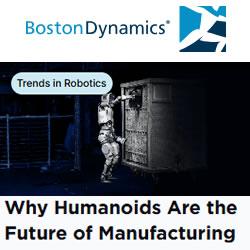
Boston Dynamics Webinar - Why Humanoids Are the Future of Manufacturing
Join us November 18th for this Webinar as we reflect on what we've learned by observing factory floors, and why we've grown convinced that chasing generalization in manipulation—both in hardware and behavior—isn't just interesting, but necessary. We'll discuss AI research threads we're exploring at Boston Dynamics to push this mission forward, and highlight opportunities our field should collectively invest more in to turn the humanoid vision, and the reinvention of manufacturing, into a practical, economically viable product.